CGH Clarity Session Vol. 2
Unlocking Capital & Catalyzing Partnerships for Sustainable Growth
The Preparation Gap: What Kenyan Businesses Are Missing Before They Seek Capital and Partnerships
24 February 2026
Some of the most useful conversations happen when entrepreneurs who have been through it sit alongside experts who have been through it and everyone agrees to be honest.
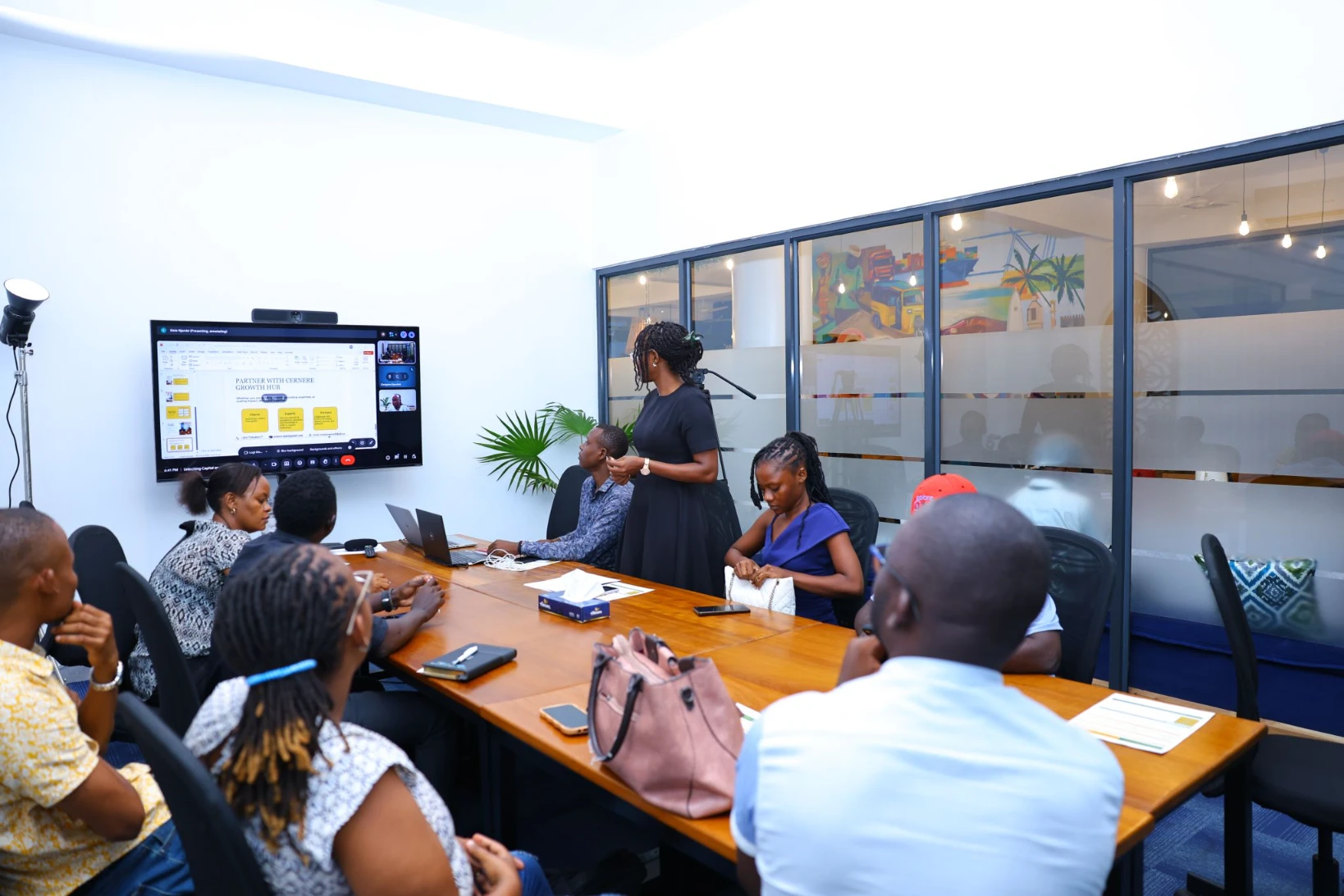
That was the spirit of second CGH Clarity Session that brought together entrepreneurs to pick the brains of a seasoned entrepreneur, a commercial banker, and a partnerships practitioner. Just a room full of people willing to ask hard questions and practitioners willing to answer them plainly on what it actually takes to attract capital, build partnerships that last, and grow without losing coherence.
Voices in the Room
The session featured three practitioners speaking from lived experience:
Elias Mabiria
Founder navigating the journey from village manufacturing startup to investor-backed enterprise, with hard-won lessons from failed loan applications, a Silicon Valley pitch, and a $20,000 investor-funded training programme in the United States.
Dennis Mwambi
Partnerships practitioner with direct experience securing funding for community-based organizations, and a perspective on how the approach to institutional partnerships has shifted from idea-driven to people- and systems-centric.
Atieno Donde
Commercial banking professional who shared the institutional lens. What banks actually look for, the most common gaps they find, and what entrepreneurs misunderstand about the lending relationship
Twenty entrepreneurs from across sectors in the room and online who come with questions, pushed back on the answers, and made the conversation worth having.
Here is what the room discussed on:
Theme 1: The Entrepreneurial Journey Was Never Meant to Be Walked Alone
Elias opened with something many founders feel but rarely say plainly: starting a business is hard, and discouragement often comes from the people closest to you. His manufacturing business began in a village, without equipment, know-how, or working capital, and with family members actively advising against it.
What kept him going was partnership; the presence of someone who believed in the vision and provided the encouragement to persist when external conditions were unfavorable.
The entrepreneurial journey should not be walked alone. A partner provides the encouragement to persist.
This framing set the tone for the session: partnerships are not just resource mechanisms. They are, at their core, a commitment to shared accountability and that begins long before any MOU is signed.
Theme 2: Investor Readiness Is Built, Not Presented
One of the most direct insights of the session came from Elias's account of how he became investment-ready. Before an investor committed to funding a factory, they first invested $20,000 to fly Elias to the United States for seven weeks of training on how to tell his business story. The investment came after the preparation, not before it.
His experience in Silicon Valley reinforced this. A $500,000 ask, which felt substantial to him, was too small for most investors there. The lesson: understanding the landscape of capital, and mapping your business journey before you pitch, is as important as the pitch itself.
The session surfaced a consistent thread: the most difficult part of fundraising is rarely the fundraising itself. It is knowing how things work and what capital providers want to see and building toward that, quietly and consistently, before the conversation begins.
Investor readiness is not instant. It requires learning, self-building, and understanding the investor before you're in the room with them.
What investor readiness actually requires from the session:
- —Knowing your investor: their thesis, typical cheque size, and what they need to underwrite a decision
- —A clear, sequenced business narrative beyond the vision, to a journey they can track
- —Evidence of learning: mentorship, accelerator programmes, and continuous self-improvement
- —Complementary partnerships: the combination of experience and passion in a founding team was cited as a deciding factor in one early grant award
- —The patience to build before you pitch
Theme 3: What Banks Are Actually Looking For, and What Most Businesses Are Missing
Atieno Donde offered the institutional perspective of scenarios where businesses appear impressive on paper but on closer examination often reveal significant gaps. The gap is almost always in documentation discipline and financial structure.
Funding only amplifies the existing state of operations. If financial systems are poor, capital makes the mess bigger.
The non-negotiable prerequisites for loan consideration:
- —Credit history (CRB report): Repayment consistency is checked first. A negative CRB record closes the conversation before it begins.
- —Business age: A minimum of three years in existence is required; evidence that the business has survived, not just launched.
- —KYC documentation: Identity and legitimacy of the business must be verifiable.
- —Financial records: At least one year of bank statements is required, and they must demonstrate that funds moving through the account are genuinely business-related. Red flags such as deposits from betting platforms are noted.
The most common gaps banks find:
- —Poor record systems. No clear documentation of income, expenses, or transactions.
- —Weak cost controls. No visibility into where money is going or whether the business is profitable at the unit level.
- —Cash flow leaks. Inconsistent management of receivables and payables.
- —Mixing of business and personal funds. The single most common structural problem and the one that most reliably disqualifies an application.
Atieno Donde's framing was direct: these are not peripheral concerns but funding basics and the businesses that treat them as administrative burdens are the ones that struggle to access capital repeatedly.
Theme 4: Partnerships Are Multipliers
Partnerships can make or break a business. They are essential for unlocking resources and expertise but only if the foundation is right.
Mr. Dennis observed that the approach to partnerships has shifted over time, from idea-driven to people-centric; focused on how resources will impact people. The availability of mobile technology and the move into AI are accelerating this shift toward systems, transparency, and verifiability.
The implication for organizations seeking partnerships: a track record speaks louder than any pitch. Passionate ideas must be accompanied by clarity, evidence, and credibility and the credibility must be demonstrable, not just described.
Dennis augmented his take grounded in two contrasting early experiences. The first: He secured a 20 million shillings for a project involving mother support groups, then watched it falter because the mothers themselves had not been consulted on the idea. The second: securing 500,000 shillings for a small community-based organization by being precise about the work, the reporting structures, and the intended outcomes led to additional cycles of funding because the first cycle was managed exactly as promised.
Four lessons for keeping partnerships alive from Dennis Mwambi:
- —Regular communication and reporting: partners need to know things are on track, and they need to hear it from you before they have to ask
- —Stay aligned with evolving priorities and pay attention to where the priorities of your partners are moving. Funders and institutional partners are moving toward climate, AI and measurable community impact.
- —Nurture reputation and track record: every delivery is a reference for the next opportunity
- —Treat partnerships as relationships, not transactions: invest time and communication when nothing is needed, not only when you require help
Theme 5: The Post-Disbursement Relationship Is Where Most Things Go Wrong
One of the most practical parts of the session addressed what happens after funds are received and the patterns that most reliably lead to difficulty.
From the banking side, Atieno Donde noted that the relationship between lender and borrower often changes after disbursement: most clients stop communicating yet this is precisely when the relationship needs the most active management.
Maintaining a strong relationship with investors requires transparency and immediate communication, particularly when unexpected challenges arise.
The most common causes of repayment difficulty or underperformance, as surfaced in the session:
- —Diversion of funds. Using capital for purposes other than those agreed such as starting a second business without clear structure, or using funds for personal expenditure.
- —Cash flow mismanagement. Inadequate discipline around receivables, payables, and operating costs once capital is in the account.
- —Disengagement. Stopping communication when challenges arise, rather than engaging proactively. Bankers too expect to hear about problems early with a proposed solution and a specific ask.
Elias's experience reinforced the investor side of this: when unexpected challenges arose: machinery damage, high power costs, external shocks he communicated this to his investor. Identify the issue, propose a solution, specify what additional support is needed. Investors who are kept informed can communicate with others to protect the original investment.
Theme 6: SME Partnerships as a Credibility Strategy
A practical exchange in the session addressed a challenge specific to small and medium enterprises: individually, an SME rarely has every component a funder looks for. Collectively, a well-structured SME partnership can.
The session highlighted two practical mechanisms:
- —An MOU with clear role delineation. Specifying who does what, with what staffing, and with what accountability before any money moves. This prevents one organization from diverting funds and gives funders a structure they can evaluate.
- —Community representation in governance. Beyond corporate social responsibility, including community voice in the governance of an SME partnership builds the kind of reputation that makes funders return.
The point underlying both: funders rarely see a single SME with every required component. The organizations that win partnerships and sustain them are the ones that demonstrate they have done the structural work to be a reliable delivery partner.
Six Things the Room Agreed On
Capital readiness is built before the conversation, not during it. The businesses that consistently attract funding have done the unglamorous work of financial structure, documentation, and governance before they need the money.
Know your investor before you pitch. Thesis, cheque size, decision criteria understanding the capital landscape you're operating in is as important as the opportunity you're presenting.
Funding amplifies what already exists. Strong systems become stronger. Weak systems become more visibly broken. Capital does not fix structural problems it exposes them at scale.
Partnerships require infrastructure alignment, not just mission alignment. Shared values are the starting point. Decision rights, reporting structures, and operational clarity determine whether the partnership delivers.
Communication is the relationship. With investors, lenders, and partners alike, proactive, honest communication, especially when things are difficult, is the single most consistent predictor of a sustained relationship.
Track record is the pitch. Every delivery, every reporting cycle, every conversation held with a partner or investor when nothing is needed these are the real pitch. They are what makes the next opportunity possible.
About the CGH Clarity Sessions
The CGH Clarity Sessions are practitioner-led convenings designed to surface the honest, operational insights that rarely appear in formal guidance on capital, partnerships, leadership, and sustainable growth. They are part of CGH's commitment to building the structural foundations that make East African businesses and organizations fundable, scalable, and partnership-ready.
The themes surfaced in this session connect directly to CGH's 5-Lens Growth Gap Scan which examines Strategy, Systems, People, Data, and Partnerships and the Uncover Build Grow framework through which we work with organizations to close the gaps between where they are and where capital and partnerships can take them.
If this session raised questions about your own organization's readiness for capital, for partnership, or for the next stage of growth we would welcome the conversation.